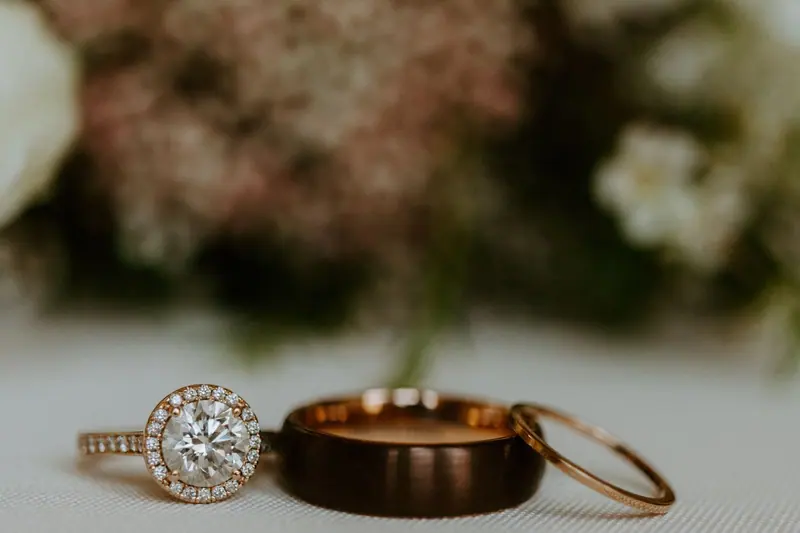
A lab grown vs natural diamond comparison comes down to four things, and how the stone looks is not one of them. The two are the same material: same carbon, same hardness, same sparkle. What differs is where the stone came from, what it costs, what paperwork comes with it and what it is worth if you ever sell. On 7 October 2026 a 1 carat natural diamond cost about 5.9 times a lab-grown one at Blue Nile; at 3 carats it cost about 13 times as much.
Below is each difference, what we could verify about it and who each stone suits.
Lab grown vs natural diamond: the differences at a glance
| Lab-grown | Natural | |
|---|---|---|
| Material | Carbon, cubic crystal | Carbon, cubic crystal |
| Hardness | 10 | 10 |
| How it formed | Grown in under a month for most sizes | Formed in the earth, as long as three billion years ago |
| Tell apart by eye? | No | No |
| GIA paperwork today | "Premium" or "Standard" only | Full color, clarity and cut grades |
| 1 carat at Blue Nile, 7 Oct 2026 | From $557 | From $3,261 |
| Resale | Little | Below retail, but better |
Sources for each row are in the sections below.
Is a lab grown diamond a real diamond?
Yes. The FTC's Jewelry Guides define a diamond as "a mineral consisting essentially of pure carbon crystallized in the isometric system," with a hardness of 10. Nothing in that definition mentions where the stone formed, and when the FTC revised the Guides in 2018 it eliminated the word "natural" from it. GIA describes a lab-grown diamond as possessing essentially the same chemical, physical and optical properties as a natural one.
One thing the rules do not allow is hiding the origin. In 2019 FTC staff warned eight jewelry sellers not to call a lab-created stone a diamond unless the word is immediately preceded by a clear disclosure that it is not mined, such as "laboratory-grown" or "laboratory-created." A simulant is a different matter: moissanite and cubic zirconia are not diamond at all, and our moissanite vs diamond comparison covers that separate question. For the full answer, including why the FTC Guides tell sellers not to call a lab-grown stone "real" or "genuine," see are lab-grown diamonds real?
Where they differ is in how they formed. GIA noted in 2019 that growing a diamond in a lab "typically requires less than a month for most sizes," and that most diamonds grown by the CVD method get further heat or irradiation treatment afterward to change their color. A natural diamond formed deep in the earth, in some cases billions of years ago.
Can you tell the difference between lab grown and natural?
Not by looking. GIA says that because the two are "essentially chemically and optically the same," traditional gemological observations and old-style diamond detectors are not able to tell them apart. The reliable ways are a professional gem lab or a specialist screening instrument that reads the growth patterns each process leaves behind.
That has two practical consequences. A jeweler's handheld "diamond tester" will pass both, so it proves the stone is diamond, not which kind. And the paperwork is doing the real work: buy a graded stone, look up the report number on the lab's website, and check that the same number is laser-inscribed on the girdle once the stone arrives.
The price gap, and why it widens with size
We priced both at Blue Nile on 7 October 2026: round brilliants, sorted by price, natural filtered to G color or better, VS2 or better and an Excellent cut. These are the same figures as our lab-grown diamond price check, which covers seven sizes in detail.
| Size | Lab-grown | Natural | Natural costs |
|---|---|---|---|
| 1 ct | $557 | $3,261 | 5.9x |
| 2 ct | $1,546 | $17,466 | 11.3x |
| 3 ct | $2,912 | $38,566 | 13.2x |
The multiple more than doubles between 1 and 3 carats because the two price curves are different shapes. Natural diamonds get rarer as they get bigger, and GIA says a heavier stone of the same quality is "more rare and the price would likely increase accordingly." Lab-grown prices per carat rose much more gently in our data, from about $525 at 1 carat to $967 at 3.
The comparison also leans conservative. The cheapest lab-grown stones at Blue Nile were D to F color and VS1, a grade or more above the G and VS2 natural stones they are compared with. A natural diamond at truly identical grades would cost more again.
Grading: what the paperwork says now
This changed recently, and many comparison pages have not caught up. GIA still grades natural diamonds on the full four Cs. But since 1 October 2025 a lab-grown diamond sent to GIA comes back rated only "Premium" or "Standard," with no color or clarity letter, and a stone below the Standard minimums gets no document at all. GIA's stated reason is that most lab-grown stones fall "into a very narrow range of color and clarity."
At Blue Nile, every one of the cheapest lab-grown stones we found, at every size from half a carat to five, was F color or better and VS1 or better. That is one retailer, though. A second, Stienhardt, sorted by price on 10 October, listed 1 carat rounds from $354 at D color and SI1 clarity, about $200 under Blue Nile's floor. Lower grades do exist, and they are where some of the savings are, so compare the same size at more than one shop.
The practical result is that a lab-grown grade sheet bought today usually comes from IGI, and the natural stone you compare it with usually has a GIA report. Two different labs means the letters do not line up exactly; our GIA vs IGI comparison explains how to read them side by side, and our guide to what GIA now issues for lab-grown stones covers the older GIA reports still in circulation.
Resale: which holds value better
Natural, but that is a low bar. Lab-grown prices have fallen for years as production has grown. JCK reported in July 2026 that a wholesale lab-grown index is down 96% since 2018, including a 26% fall across 2025. A stone competing with a cheaper equivalent every year resells for little.
A natural diamond holds value better, but it is still bought at a retail price that includes the seller's margin, and a dealer buying it back pays wholesale. Expect to get back less than you paid, even for a good stone.
The honest framing: one loses value hard and the other loses it slowly, and neither is an investment. If getting your money back matters, read whether lab-grown diamonds hold their value before you choose.
What are the disadvantages of lab grown diamonds?
The honest list, with the evidence for each:
- They lose value fast. The wholesale index JCK reports is down 96% since 2018. Expect little back if you sell.
- Prices are still falling. The same JCK report puts wholesale prices down 13% year on year in the second quarter of 2026. The stone you buy today may cost less next year.
- No GIA grade sheet on new stones. Since October 2025 GIA rates lab-grown stones only "Premium" or "Standard," so letter grades now come from IGI.
- No rarity. If part of what you want is a stone the earth made, lab-grown cannot offer that, at any price.
- An energy footprint you usually cannot see. Growing a diamond runs on electricity, and how clean that is depends on the grower.
Why are some jewelers against lab grown diamonds?
Not all are: Kay, Blue Nile and Brilliant Earth all sell them. The strongest case a jeweler can make against lab-grown is the first two points above. A stone whose price keeps falling is hard to resell or trade in, and that is a fair warning rather than only a sales line. It is not a case that the stone is a lesser diamond; physically, it is not.
Is lab grown or natural more ethical?
Neither choice is automatically the ethical one. A natural diamond's record depends on where it was mined and how well it was traced from the mine. A lab-grown diamond avoids mining, but growing one runs on electricity, so its footprint depends on how that electricity is made. If either matters to you, ask the seller where the stone came from, or how the grower is powered, and treat a vague answer as an answer.
Which should you buy?
We are not going to pretend this is close on price. It is not. But price is not the only thing people are buying, and a guide that only recommends one option is a guide that is selling something.
Buy lab-grown if you want the largest or cleanest stone your budget allows, you are shopping at 1 carat or above where the gap is widest, and the origin of the carbon does not matter to you. The money saved can go into a better setting, a bigger stone or simply stay in your account.
Buy natural if the fact that the stone formed in the earth over an enormous span of time is part of why you want it. That is not an irrational preference and we will not talk you out of it. Some people are buying a geological object, not an optical one, and no price table answers that. Buy natural too if you are buying something to pass down and its provenance matters to the story.
Buy neither, yet, if you are stretching. The strongest argument for lab-grown is not that it is cheap. It is that it removes the pressure to overspend on a symbol. If the choice in front of you is a natural diamond on credit or a lab-grown one paid for outright, that is not really a diamond question.
For the full buying process once you have decided, see our guide to lab-grown diamonds for engagement rings, or start from a number with engagement rings under $5,000.
Prices checked 7 October 2026 at Blue Nile, round brilliant loose diamonds, sorted by price from low to high; lab-grown stones graded by IGI, natural stones by GIA. Material and identification from GIA; grading change from GIA; definition and disclosure from the FTC Jewelry Guides and FTC staff warning letters; market prices from JCK. JewelEditor Editorial.