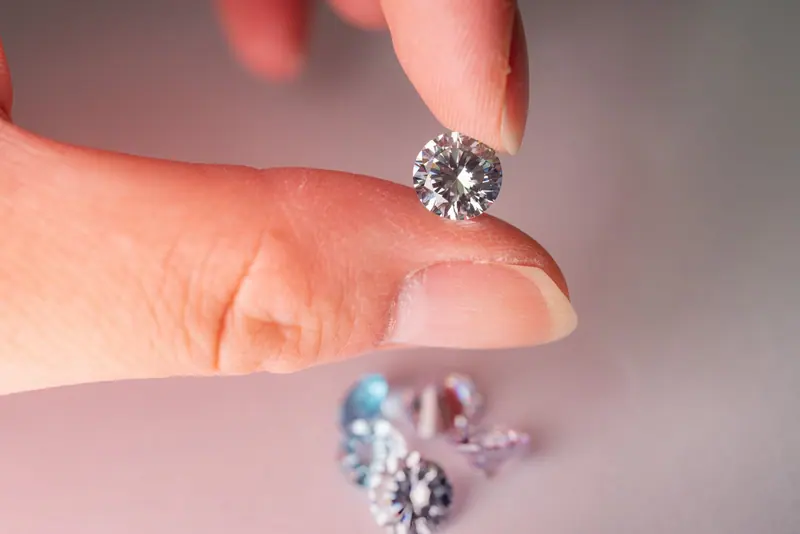
Are lab-grown diamonds real? Yes: a lab-grown diamond is diamond, the same crystal of carbon as a stone dug out of the ground, and it meets the US government's definition of a diamond. What it is not is natural, and that is where the word "real" gets complicated. The FTC's Jewelry Guides actually tell sellers not to call a lab-grown diamond "real" or "genuine."
Below is what the rules say, how labs tell the two apart when nobody else can, what separates a lab-grown diamond from a fake, and what the difference in origin does to the price.
What makes a diamond a diamond
The US definition is in section 23.12 of the FTC Jewelry Guides: "a mineral consisting essentially of pure carbon crystallized in the isometric system," with a hardness of 10, a specific gravity of about 3.52 and a refractive index of 2.42. Nothing in that definition says where the carbon crystallized. When the FTC revised the Guides in 2018, it removed the word "natural" from the definition.
A lab-grown diamond meets it. GIA, the Gemological Institute of America, puts it directly: both are diamonds, and a lab-grown one "possesses essentially the same chemical, physical and optical properties as its natural counterpart."
So on the question most people mean when they search "are lab grown diamonds real" (is it actually diamond, or something pretending to be?), the answer is settled. It is diamond.
Why sellers are told not to call it "real"
Here is the part most guides skip. Section 23.27 of the same Guides says it is unfair or deceptive to use the words "real," "genuine," "natural," "precious" or "semi-precious" to describe any product that is "manufactured or produced artificially."
A lab-grown diamond is produced artificially, so under the FTC's guidance a seller should not advertise it as a "real diamond" or a "genuine diamond," even though it is diamond. Those words are kept for the mined stone.
The Guides also require the origin to be clear. In 2019, FTC staff sent warning letters to eight jewelry marketers, telling them not to use the name of a precious stone, including diamond, for a lab-created stone unless it is immediately preceded by a clear disclosure that the stone is not mined. In practice that means:
| Acceptable | Not acceptable |
|---|---|
| "Laboratory-grown diamond" | "Real diamond" for a lab-grown stone |
| "Laboratory-created diamond" | "Genuine diamond" for a lab-grown stone |
| "[Manufacturer name]-created diamond" | "Diamond" with the origin hidden in small print |
| "Cultured diamond," only with a clear qualifier such as "laboratory-grown" (section 23.12) | "Faux diamond," which the Guides say is not an adequate disclosure (section 23.25) |
So the honest answer has two halves. It is a real diamond in substance. It should not be sold as a "real diamond" in words. If a listing leans on "real" or "genuine" for a lab-grown stone, treat that as a sign the seller is not following the FTC's guidance.
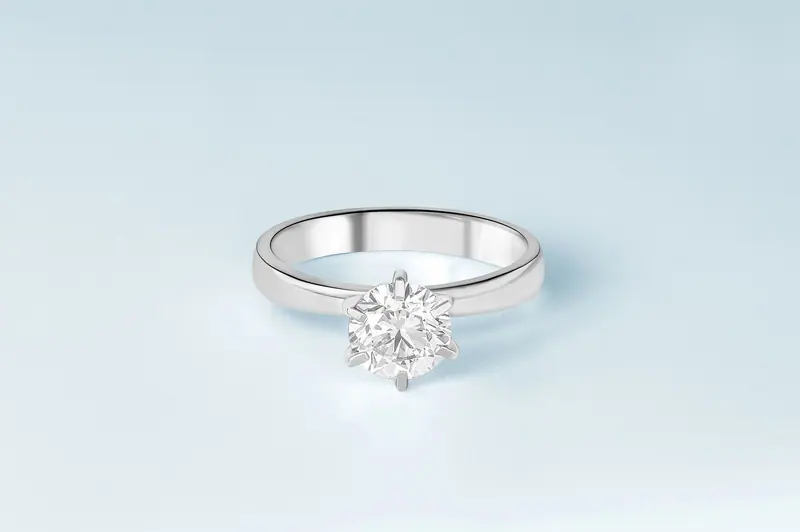
Can anyone tell a lab-grown diamond from a natural one?
Not by looking. GIA explains that because the two are essentially the same chemically and optically, "traditional gemological observations and old-style 'diamond detectors' are not able to tell them apart." It says identification at a professional gemological laboratory, or with specialist devices built for the job, is the only reliable way.
The differences labs look for come from how the stone grew. GIA notes that a diamond grown in a lab forms in weeks, while a natural one formed deep in the earth over millions of years or more, and the two grow differently. That leaves telltale growth patterns, which gem labs detect with specialist equipment; GIA also makes a screening device for jewelers, the iD100.
Two practical consequences:
- An ordinary diamond tester will not tell you. GIA says old-style diamond detectors cannot separate lab-grown from natural, because both are diamond.
- The paperwork is what tells you the origin. A grading report from a lab such as IGI or GIA states whether a stone is laboratory-grown. GIA changed its lab-grown reports in October 2025; our guide to GIA-certified lab-grown diamonds explains what each version of the report shows.
How lab-grown diamonds are made
According to GIA, gem-quality diamonds are grown by two methods:
- HPHT (high pressure, high temperature) mimics the conditions that form natural diamonds deep in the earth.
- CVD (chemical vapor deposition) breaks down a carbon-rich gas such as methane and deposits the carbon atoms onto a diamond seed.
Either method typically takes less than a month for most sizes, GIA says, and GIA noted in 2019 that most CVD diamonds get further heat or irradiation treatment afterward to enhance or change their color. Natural diamonds formed as long as three billion years ago.
Lab-grown diamond vs fake diamond
"Fake diamond" usually means a simulant: a different material that looks like diamond. The two common ones are cubic zirconia and moissanite. They are not diamond, and under section 23.12 the unqualified word "diamond" may only describe a product that meets the definition.
| Lab-grown diamond | Natural diamond | Moissanite | Cubic zirconia | |
|---|---|---|---|---|
| Material | Diamond (carbon) | Diamond (carbon) | Silicon carbide | Zirconium dioxide |
| Is it diamond? | Yes | Yes | No | No |
| How it must be described | With "laboratory-grown" or similar | Diamond | By its own name | By its own name, or as simulated |
If you are weighing moissanite against diamond, our moissanite vs diamond comparison covers that choice.
What "real" does not settle: price
Being diamond does not make a lab-grown stone worth the same. On 16 October 2026 we recorded prices at two retailers.
Blue Nile, loose 1 carat round diamonds, sorted cheapest first. The cheapest lab-grown stone was $553 for a 1.03 carat, D color, VS1 stone graded by IGI. The cheapest natural stone at G color or better, VS2 or better and an Excellent cut was $3,089 for a 1.00 carat G, VS2 graded by GIA. The natural stone cost 5.6 times as much and had the lower color and clarity grades.
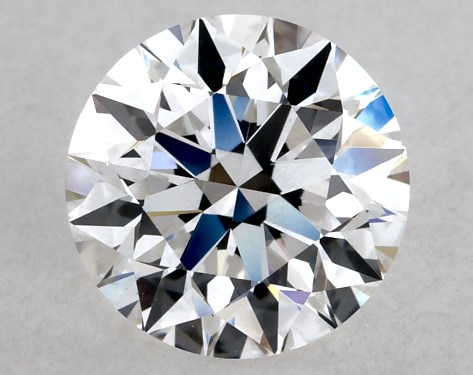
1.03 ct round lab-grown diamond
D color, VS1, Excellent cut · Graded by IGI
The cheapest 1 carat round lab-grown diamond at Blue Nile on 16 October 2026. The link opens the same search, cheapest first.
$553 loose diamond
Check price at Blue Nile: 1.03 ct round lab-grown diamond, D color, VS1, Excellent cut (opens in a new tab)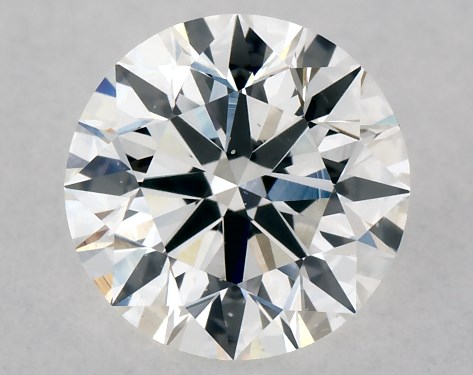
1.00 ct round natural diamond
G color, VS2, Excellent cut · Graded by GIA
The cheapest 1 carat round natural diamond at G or better, VS2 or better and an Excellent cut, the same day: 5.6 times the lab-grown price, with a lower color and clarity grade.
$3,089 loose diamond
Check price at Blue Nile: 1.00 ct round natural diamond, G color, VS2, Excellent cut (opens in a new tab)What happens when you click: Blue Nile prices the setting and the stone separately. You open the setting, then choose a diamond, and it offers handpicked matches if you would rather not filter. Free shipping, free returns and a lifetime warranty at Blue Nile.
Prices checked October 16, 2026 at Blue Nile. Prices change, so confirm at checkout. Product photos: Blue Nile. We earn a commission if you buy through these links.
Capucinne, the same ring with either stone. Capucinne sells its Oval Tapered Solitaire with a lab-grown or a natural diamond, both listed at F-G color and VS clarity. In 14k yellow gold:
| Center stone | Lab-grown diamond | Natural diamond | Natural costs |
|---|---|---|---|
| 0.3 ct | $1,570 | $2,980 | 1.9 times |
| 0.5 ct | $2,040 | $4,520 | 2.2 times |
| 0.75 ct | $2,940 | $7,820 | 2.7 times |
| 1 ct | $5,080 | $13,540 | 2.7 times |
| 1.25 ct | $6,170 | $18,270 | 3.0 times |
| 1.5 ct | $8,210 | $24,320 | 3.0 times |
These are complete rings, so the setting is part of both prices. The gap generally widens as the stone gets bigger.

Oval Tapered Solitaire
14k yellow gold · 1 ct oval lab-grown diamond, F-G, VS
The same ring with a natural diamond of the same size and stated grade is $13,540.
$5,080 ring, 14k
Check price at Capucinne: Oval Tapered Solitaire, 14k yellow gold (opens in a new tab)
Oval Tapered Solitaire
14k yellow gold · 1 ct oval natural diamond, F-G, VS
2.7 times the lab-grown version of the identical ring.
$13,540 ring, 14k
Check price at Capucinne: Oval Tapered Solitaire, 14k yellow gold (opens in a new tab)Prices checked October 16, 2026 at Capucinne. Prices change, so confirm at checkout. Product photos: Capucinne. We earn a commission if you buy through these links.
The gap is not fixed. Lab-grown prices have fallen fast: JCK reported that a wholesale lab-grown price index was down 96% since 2018. That is also why resale value is the real trade-off; see do lab-grown diamonds hold their value? and our full lab-grown vs natural diamond comparison.
So, should "real" decide it for you?
If the question is whether you are buying actual diamond, a lab-grown stone settles it: you are. It has the hardness, the sparkle and the chemistry of diamond, and nobody can tell by looking.
If the question is whether you want a stone that formed in the earth, or one whose price is likely to hold, that is a different question, and only a natural diamond answers yes to the first. Decide which question matters to you, then make sure the listing answers it honestly: the word "laboratory-grown" or "laboratory-created" next to "diamond," and a grading report that states the origin.
If you are choosing a lab-grown diamond for a ring, our lab-grown diamonds for engagement rings guide covers settings, retailers and budgets. For current lab-grown prices by size, see our lab-grown diamond price guide, and to see how big a 1 carat or 2 carat stone looks on a hand, try our carat visualizer.
How we researched this
We read sections 23.12, 23.25 and 23.27 of the FTC Guides for the Jewelry, Precious Metals, and Pewter Industries (16 CFR Part 23) on the eCFR on 16 October 2026, along with the FTC's 2018 note on the revised Guides and its 2019 warning-letter announcement. Detection and growth facts come from GIA's article on the difference between natural and laboratory-grown diamonds. Prices were recorded on 16 October 2026: the first listing in Blue Nile's 1 to 1.1 carat round searches sorted by price, and Capucinne's own listing for every stone size of the Oval Tapered Solitaire. The full data is in our research notes.
Prices checked 16 October 2026 at Blue Nile and Capucinne. Definitions from the FTC Jewelry Guides, 16 CFR 23.12, 23.25 and 23.27; detection and growth from GIA. JewelEditor Editorial.