The 3-month-salary "rule" is a 1939 De Beers ad campaign, not financial advice. The average US engagement ring spend is $5,200 (The Knot 2025 Jewelry & Engagement Study), about a third of what the rule prescribes for a buyer earning $80,000 a year. That gap is the entire industry.
This article is what engagement rings under $5000 actually look like when nobody is upselling. It's a buying guide drawing on published retailer pricing, GIA grading-lab guidance and Blue Nile's currently listed catalog, not a list of affiliate links sorted by commission. Every price below was checked against live Blue Nile listings on 24 September 2026.
What the spec letters and numbers actually mean
Before we go further, the four shorthand terms every diamond is described by, because if you don't know what "1.5ct D-VS1" means, the rest of this post is just industry noise.
Carat: the size
"Carat" is technically a measure of weight (1 carat = 0.2 grams), but what your eye sees is the diameter across the top of the stone. Useful reference points:
- 0.5 carat ≈ 5.2 mm across: small but visible, classic-looking
- 1.0 carat ≈ 6.5 mm across: the most popular engagement ring size
- 1.5 carat ≈ 7.4 mm across: substantial, photogenic, the size most buyers land on
- 2.0 carat ≈ 8.1 mm across: dramatic, "statement piece"
For comparison: a US dime is 17.9 mm across, so a 1.5ct round stone is roughly 40% the diameter of a dime and a 2.0ct is almost half. Visible from across the room; photogenic in any normal light.
Color: how clear vs. yellow
Diamonds are graded on a letter scale from D (perfectly colorless) to Z (visibly yellow). The grades that matter for engagement rings:
- D, E, F = "colorless": the highest tier. Rare. You're paying for the absence of any tint.
- G, H, I, J = "near-colorless": most engagement rings live here. The tint is invisible to the naked eye in white-metal settings.
- K and below = visible warm tint. Avoid for white-metal settings; can work for yellow or rose gold (the metal's color hides the tint).
Most people cannot tell the difference between a D and an H without putting them side-by-side under jeweler's lighting. D-F is a luxury choice; G-H is the practical choice.
Clarity: how flawed vs. clean
Clarity grades describe internal flaws (inclusions) seen under 10× magnification. The scale, simplified:
- FL, IF = "flawless / internally flawless": virtually no inclusions. Very rare, very expensive.
- VVS1, VVS2 = "very, very slightly included": microscopic flaws, invisible at any normal viewing distance.
- VS1, VS2 = "very slightly included": small flaws visible only under magnification. This is the engagement-ring sweet spot: flaws don't show to the naked eye, but you're not paying flawless prices.
- SI1, SI2 = "slightly included": flaws may be visible if you look carefully, but the stone can still be "eye-clean."
- I1, I2, I3 = "included": flaws clearly visible. Avoid.
The phrase to remember: "eye-clean." A VS2 that's eye-clean is functionally identical to a VVS1 to anyone who isn't using a loupe.
Cut: how well it sparkles
Cut measures how the stone is shaped and polished, and it's the spec that matters most because it determines how much light the diamond reflects. The grades:
- Excellent (Ideal): the only grade you should accept at this budget.
- Very Good: close to Excellent but visible difference under direct light.
- Good, Fair, Poor: walk away.
A 1.0-carat Excellent-cut diamond often looks bigger and brighter than a 1.3-carat Fair-cut at the same color and clarity, because cut determines light performance, and your eye reads light performance as "size."
So when this post says "1.5ct D-VS1, Excellent cut", that translates to: a 7.4 mm-wide colorless diamond with microscopic flaws and maximum sparkle.
What $5,000 actually buys
Most articles open with reassurance. We're going to open with specifics, because the reassurance is the part the industry uses to sell you up. Here is what the money actually reaches at Blue Nile's listed prices on 24 September 2026:
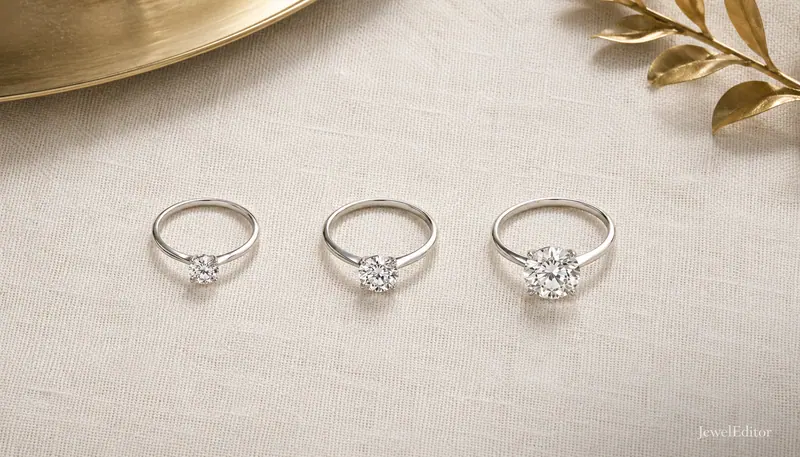
$5,000 earned the "sweet spot" label because it is where the cost-to-quality curve used to flatten, and because it is roughly what people spend. For a natural diamond that still holds: below $3,000 every dollar of upgrade is visible, and above about $7,500 you are paying for spec improvements that need a magnifier to detect.
For lab-grown, the flattening point has moved down, and this guide is not going to pretend otherwise. A 1.5-carat D-VS1 lab-grown stone lists from about $1,010, and our editor's-pick setting is $1,635. That is a complete ring at about $2,645, with the same specs we would have called a $5,000 ring in May. Spending the rest of the $5,000 buys more carat, not better quality: about 3 carats instead of 1.5.
A few things this table doesn't say but should. Cut is non-negotiable at any budget. A 1.0-carat Excellent-cut round looks bigger and brighter than a 1.3-carat Fair-cut at the same color and clarity. Color D–F vs G–H is mostly invisible to the unaided eye when set in white metal. See our Diamond Color Scale GIA guide for the full D-Z reference and the Color Grade Visualizer to see the difference yourself. Clarity VS1 vs VS2 is a magnifier-grade distinction and almost never visible to the wearer.
So the practical advice: optimize for cut first, then carat, then color, then clarity. The industry calls this "the four Cs" and orders them differently because they want you to spend on what you can't see.
Lab-grown or natural: what's the difference?
A lab-grown diamond is a diamond grown in a lab from carbon under heat and pressure. Chemically and physically, it is identical to a natural diamond (per GIA's lab-grown grading methodology): same crystal structure, same hardness, same sparkle. The only real difference is origin: one took 2 billion years to form underground, the other took 6 weeks in a reactor.
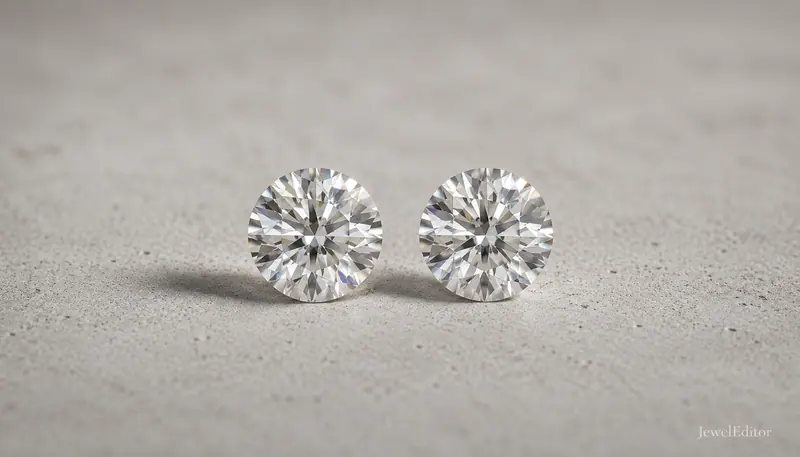
The prices, though, have stopped being comparable at all. On 24 September 2026, a lab-grown 1.5ct D-VS1 round listed at Blue Nile from about $1,010. The same spec in a natural diamond started at $9,901, with most of the listings we sampled between $10,000 and $14,000. That is roughly a tenth of the price for a stone no one can tell apart without a report.
A few of those bullet points deserve direct sourcing. The price-decline trend (5–8% per year for top grades) is covered in trade reporting at JCK Magazine and Mike Fried's Diamonds Pro pricing guide. The Kimberley Process certification scheme covers conflict-free sourcing for natural diamonds, with 60 participants representing 86 countries and about 99.8% of global production.
The honest summary: if you wouldn't sell the ring under any circumstance, the resale argument is moot. Most engagement rings stay in the family or get reset, not resold. Lab-grown wins on visible size, ethics-by-default and cost transparency. Natural wins on tradition, resale and the specific buyers who care about provenance. We don't think one is morally superior to the other. We think the choice should match the use case.
What we will say: a $2,645 lab-grown ring now looks like an $11,500 natural one. If visual size matters at all, that's the move, and it no longer costs $5,000 to make it.
What 1.5 carats actually looks like
Carat weight is the spec people fixate on but cannot intuit. "1.5 carats" means nothing in prose. Your eye doesn't translate weight into face-up area. Here's the visual scale:
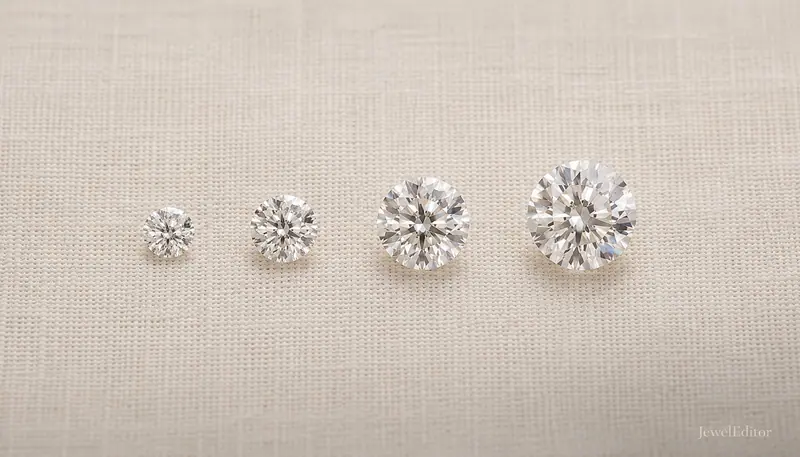
A 1.5ct round sits at about 7.4 mm across. It reads as a substantial stone, visible from across a dinner table, photogenic in any normal lighting. A 2.0ct (8.1 mm) is dramatic; reads as "statement piece." The jump from 1.0ct to 1.5ct is more visible than the jump from 1.5ct to 2.0ct, which is why we treat 1.5ct as the lab-grown anchor even though this budget now stretches to 3 carats. Size is a decision about the wearer's hand and taste, not about spending the whole budget because it is there.
For natural at this tier (1.0–1.2ct), the stone reads as classic and proportional, what most older engagement rings actually were before lab-grown shifted the size norm. Neither is wrong. The size question is partner-dependent: ask before you buy.
Where to buy: our pick is Blue Nile
Most affiliate articles list eight retailers and call it research. We narrowed to five reputable US sellers that publish full GIA or IGI grading reports at this price tier and offer transparent pricing on lab-grown stones. The recommendation below reflects which of those is the best default. It does not reflect first-hand purchase experience, which we will only claim once we've published a corresponding retailer review with a research artifact in this repo.
Our top recommendation is Blue Nile for three reasons:
- Selection: Blue Nile lists more loose stones than any other major US retailer. On 24 September 2026 its catalog showed about 211,000 natural and 121,000 lab-grown diamonds. Bigger inventory means you actually find the spec you want at the price you want, instead of settling.
- Transparent pricing: every loose stone is priced individually and shows its grading report before you commit, so you can compare stone to stone rather than trusting a "starting at" price. Natural stones carry GIA reports. Most lab-grown ones carry IGI, with some GIA and GCAL, so check the lab named in the listing title.
- Free everything: free shipping on every order (overnight above $500), free returns within 30 days of shipment, free return shipping and one free resize in the first year. Note that resizing a ring ends its return eligibility, so inspect first, resize second.
Real Blue Nile settings to pair with your stone
Blue Nile's "design your own ring" platform lets you pick the loose diamond and the setting separately. Here are four settings we'd happily pair with a lab-grown stone anywhere from about $1,010 (1.5 carat) to $3,700 (3 carat), all currently in their catalog:
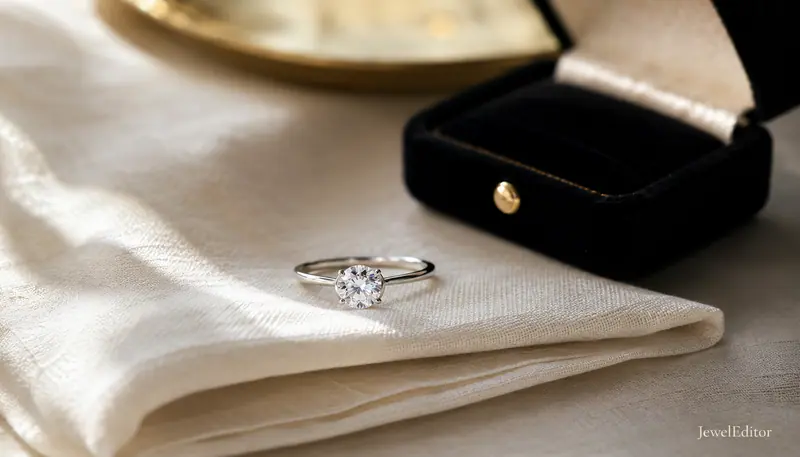
Petite Cathedral Solitaire, Platinum ($1,635 setting only): A four-prong cathedral solitaire in platinum (the most durable metal). The thin shoulders rise to lift the stone, making the diamond appear larger than the same stone in a flatter setting. This is the setting in our hero photo and our editor's pick below.
Bezel Solitaire, 14K Yellow Gold ($1,310): A modern minimalist setting where the stone is held by a thin metal rim instead of prongs. Better for active hands (no prongs to snag); slightly less light than a prong setting.
Tapered Cathedral Solitaire, 14K Yellow Gold ($1,240): Similar to the Petite Cathedral above, in yellow gold. Yellow gold pairs well with G-H near-colorless stones (the metal's tint masks any near-colorless warmth in the diamond, letting you go a grade lower on color and save).
Classic Comfort Fit Solitaire, 14K Yellow Gold (2.5mm) ($935): The most affordable of the four. A classic four-prong solitaire on a slim band. The $700 it saves against the platinum option above buys roughly a carat more stone at today's lab-grown prices.
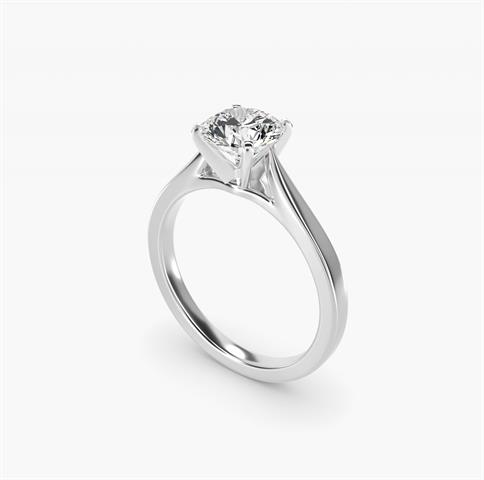
Petite Cathedral Solitaire
Platinum
Best if you want the stone to look bigger
Thin shoulders lift the stone so it reads larger. The setting in our hero photo.
$2,645 ring, from
$1,635 setting + $1,010 stone
Check price at Blue Nile: Petite Cathedral Solitaire, Platinum (opens in a new tab)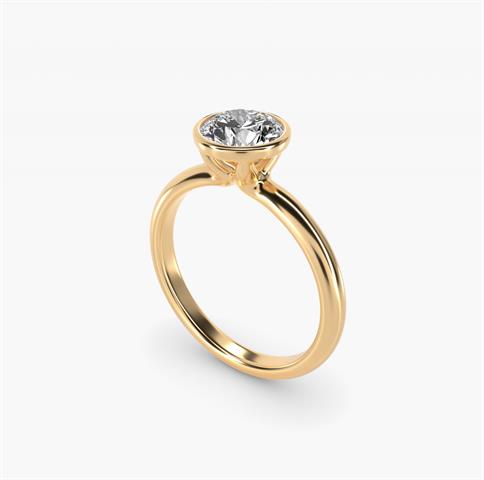
Bezel Solitaire
14k yellow gold · 2.5 mm band
Best for active hands
A metal rim instead of prongs: nothing to snag and very secure.
$2,320 ring, from
$1,310 setting + $1,010 stone
Check price at Blue Nile: Bezel Solitaire, 14k yellow gold (opens in a new tab)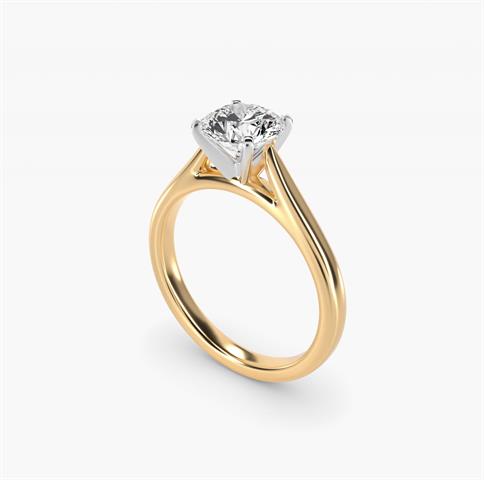
Tapered Cathedral Solitaire
14k yellow gold · 2.15 mm band
Best with a G or H stone
Yellow gold masks near-colorless warmth, so a G or H stone looks whiter.
$2,250 ring, from
$1,240 setting + $1,010 stone
Check price at Blue Nile: Tapered Cathedral Solitaire, 14k yellow gold (opens in a new tab)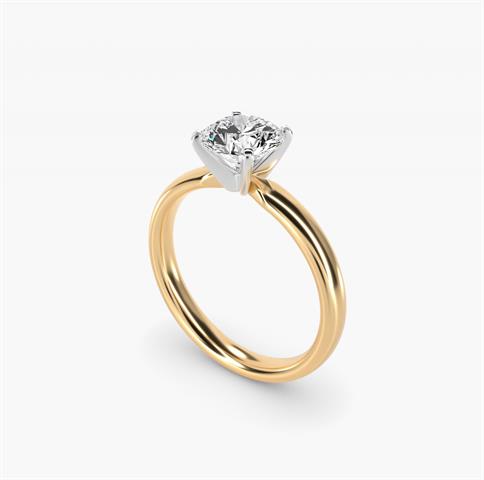
Classic Comfort Fit Solitaire
14k yellow gold · 2.5 mm band
Best for putting the money in the stone
The lowest-cost setting of the four, leaving the most budget for the diamond.
$1,945 ring, from
$935 setting + $1,010 stone
Check price at Blue Nile: Classic Comfort Fit Solitaire, 14k yellow gold (opens in a new tab)Next: the diamond
We would pair these with a 1.5–2 ct lab-grown round, D to F color, VS1 or better.
What happens when you click: Blue Nile prices the setting and the stone separately. You open the setting, then choose a diamond, and it offers handpicked matches if you would rather not filter. Free shipping, free returns and a lifetime warranty at Blue Nile.
Prices checked September 24, 2026 at Blue Nile. Ring prices are the setting plus the cheapest stone at the spec above; most stones cost more than that. Prices change, so confirm at checkout. Product photos: Blue Nile. We earn a commission if you buy through these links.
How Blue Nile compares to the rest
We price-checked Blue Nile directly and we are not going to invent numbers for the others. At Blue Nile on 24 September 2026, a 1.5ct D-VS1 lab-grown round started at about $1,010, and a solitaire setting to hold it ran $935 to $1,635. For context on where the wider market sits, the trade press tracks the same decline: see JCK Magazine and Mike Fried's Diamonds Pro. Because lab-grown pricing is moving quickly, the sensible move is to compare two or three retailers on the day you buy rather than trust any published figure, ours included.
Briefly, on each:
- Blue Nile: the largest stone inventory of any major US retailer, transparent stone-by-stone pricing, GIA reports on natural stones and mostly IGI on lab-grown. The default we recommend.
- James Allen: best-in-class 360° viewer for inspecting a stone remotely before buying. A strong alternative if you specifically want the inspection-tool experience. Now sold alongside Blue Nile, and some James Allen settings appear in Blue Nile's catalog.
- Brilliant Earth: more curated stone selection (filters out marginal lab-grown), strong sustainability narrative. Pricing tends to run slightly higher for the same spec.
- Vrai: Diamond Foundry's retail brand, with the strongest single-source traceability story (Vrai stones are grown at Diamond Foundry's facility). Smaller selection.
- Clean Origin: usually the cheapest of the five. It grades through IGI, as most lab-grown sellers now do, Blue Nile included, so treat that as the category norm rather than a mark against one retailer.
If you find a stone you specifically love at James Allen, buy it there. Editorial integrity beats brand loyalty. Blue Nile is the recommended default, not the only option.
Editor's pick at this tier
Pair a 1.5-carat lab-grown D-VS1 round diamond from Blue Nile (from about $1,010) with the Petite Cathedral Solitaire in platinum ($1,635) for a complete ring at about $2,645, roughly half the $5,000 budget.
D-VS1 is the highest spec tier where every dollar still maps to something the wearer can see. Above this grade, the upgrade is invisible without a magnifier.
If you want to use the whole budget, spend it on carat rather than grades: a 3-carat D-F, VS1-or-better lab-grown round starts at about $3,110 and lists mostly in the high $3,000s, which lands a complete ring under $5,000 with the same colorless, eye-clean specs. What we would not do is spend the difference on a higher clarity or color grade that needs a loupe to see.
What to look for in a return policy
Half of the "$5,000 engagement ring" decision is what happens AFTER you click Buy. Every retailer publishes their return + warranty terms. Read each one before you commit. Here's what a good policy looks like at this price tier, regardless of which retailer you choose:
- 30 days minimum for full inspection. Anything shorter is a signal the retailer is hedging against returns of low-quality stones. 30 days lets you inspect in sunlight, indoor warm light and fluorescent before deciding.
- No restocking fee on a returned stone in original condition.
- Full refund to the original payment method, not store credit.
- Free return shipping is standard at this price tier. If a retailer charges return shipping on a $4K purchase, that tells you something about their confidence in the stone.
- At least one free resize in the first year (most engagement rings need a half-size adjustment after a few months of wear).
- Lifetime warranty on the setting itself: covers prong re-tipping at year 5–7, rhodium re-plating on white gold every few years and routine polishing. This is separate from the return window on the stone.
What we are not going to do here is list each of the five retailers' specific return windows in days. Policies change quarterly and we have not personally received and processed a return from any of them. Claiming first-hand return-policy experience without it would be exactly the kind of fabricated authority Google's E-E-A-T guidelines warn about. A future per-retailer review post (with a documented purchase + return cycle) is where retailer-specific return-experience claims belong.
How to verify your stone after purchase
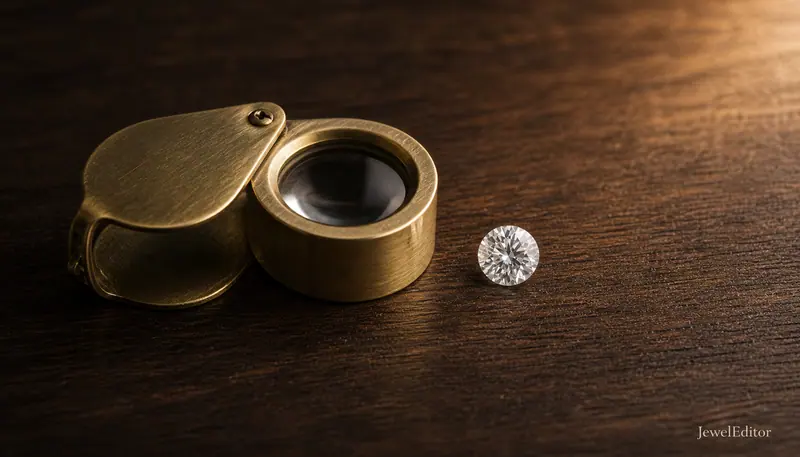
You're spending $2,600–$5,000. Verify what you got. Three steps, none expensive:
-
Match the inscription. GIA and IGI laser-inscribe the report number on the diamond's girdle (the thin edge between the top and bottom). A $40 jeweler's loupe (10× magnification) reads it. Confirm the number matches the certificate. If they don't match, you're holding a different stone than the one graded. Return it.
-
Get an independent appraisal within 30 days. A bench-trained gemologist (find one through the American Gem Society's directory) will charge $50–$150 for an appraisal that includes 4C verification + replacement value. This is what your insurance company will require anyway.
-
Photograph the stone in three lights. Direct sunlight, indoor incandescent, fluorescent (office or store). Lab-grown diamonds, especially cheap CVD product, can show subtle blue or gray tint under fluorescent that doesn't appear in studio lighting. If you see a shift, return within the window. This is rare with curated retailers but worth the five minutes.
The combined verification cost: about $100. Cheap insurance against the rare bad-batch lab-grown.
When to spend less, when to spend more
If the $5,000 tier feels tight, the drop costs you far less than it used to.
At about $1,465 you can have a 1-carat colorless, eye-clean lab-grown round (from $530) in the $935 Classic Comfort Fit solitaire. The 1.5-carat version of that same ring is about $1,945, or $2,645 with our editor's-pick platinum setting. None of these compromises on the specs that affect appearance; the only variable is size.
We'd only spend above $5,000 if you specifically want natural at 1.2 carats or more, where the stone is genuinely scarce and priced accordingly. On the lab-grown side, $5,000 already reaches 3 carats in the top grades, so the dollar after that buys the smallest visible improvement of any spending tier in the engagement-ring market.
Common mistakes at this tier
Four patterns kept showing up across the catalogs we compared. We list them here because the FTC's Jewelry Guides (16 CFR Part 23) require disclosure of certain things that retailers comply with technically but obscure practically.
Mistake one: ignoring cut grade in favor of carat weight. A 1.3-carat Fair-cut diamond looks dimmer than a 1.0-carat Excellent-cut. The industry quietly de-emphasizes cut because it's the spec that has the lowest production cost discount. Better cut means more raw stone rejected. Demand Excellent cut. Walk away from "Very Good" at this tier.
Mistake two: buying the loose stone and the setting in separate transactions thinking it's cheaper. It's almost never cheaper at this tier. The labor and resizing buffer that's bundled into a complete-ring purchase rarely costs less when broken out. The pattern works above $10,000 for buyers who want fully custom design; below that, buy the complete ring.
Mistake three: skipping the in-person look on lab-grown. Some lab-grown stones, particularly cheap CVD product, can show a slight blue or gray tint under fluorescent light that doesn't show in studio photos. If the retailer offers in-person viewing or a high-quality 360° video inspection, take it. James Allen's 360° viewer is widely regarded as the strongest remote-inspection tool in the field; in-person showroom viewing at any retailer that offers it is even better when geography allows.
Mistake four: timing the purchase around a holiday "sale." Major retailers run promotional pricing around Valentine's Day, Mother's Day and December, but the discount is almost always on stones already marked above their usual price, then "discounted" to par. Track the price for two weeks before believing a holiday sale. The honest deals are off-cycle: late January, August, October.
Closing: three things to take away
- At $5,000, the choice between lab-grown and natural is about use case, not quality. Lab-grown wins on size, by roughly three times the carat at today's prices; natural wins on resale and tradition. Both are real engagement rings, and the lab-grown one no longer needs the full budget.
- Cut grade is non-negotiable. Walk away from "Very Good" at this tier. Excellent cut on a 1.0-carat diamond beats Fair cut on a 1.3-carat, every time.
- Verify after purchase. Match the inscription, get an independent appraisal, photograph in three lights. About $100 of insurance against the rare bad batch.
If you want to run your specific situation against the budget tiers, the Budget Calculator takes 30 seconds. Want to read the full editorial methodology, including how we shop retailers and which sources we trust? See our methodology page.
The TL;DR is this: we don't make money by pushing you up the budget ladder. We make money when readers find a ring they can live with at the budget they actually have, click through to a retailer we genuinely recommend and don't return it. Right now, that retailer is Blue Nile. That's the entire pitch.
Last audited: 2026-09-24, with every Blue Nile price and policy in this guide rechecked against live listings that day. JewelEditor Editorial.