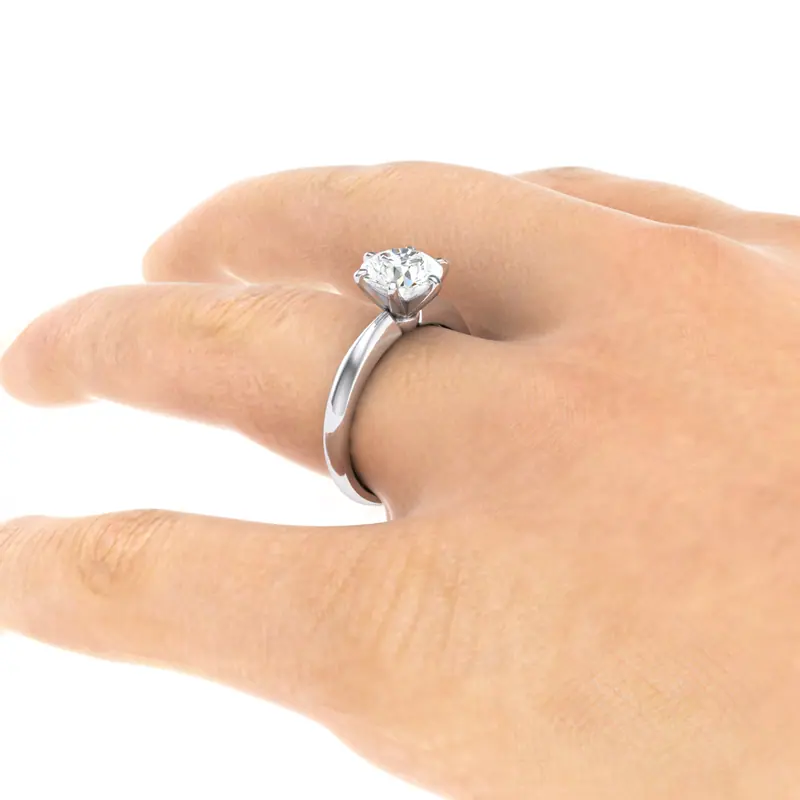
Does sterling silver tarnish? Yes. Sterling silver darkens over time because it reacts with sulfur gases in the air, and it does so faster than pure silver because of the copper mixed into it. Tarnish is not a defect and it is not a sign of fake silver. It is what sterling does.
The useful questions are why it happens, what speeds it up, and how to slow it down without wearing the silver away. The best answers come from museum conservators, who protect silver for a living, so this guide draws on the Canadian Conservation Institute rather than jeweler blogs.
What sterling silver is
Under section 23.5 of the FTC Jewelry Guides, a seller may only call something "sterling silver" if it is at least 925 parts per thousand pure silver, within a small tolerance. That is where the 925 stamp comes from. The other 7.5% is usually copper; CCI describes sterling as 92.5% silver and 7.5% copper.
That copper is the reason sterling tarnishes as readily as it does.
Why sterling silver tarnishes
The Canadian Conservation Institute (CCI) explains that when silver is exposed to sulfur-containing gases in the air, it reacts with them and forms a thin surface layer: tarnish. On pure silver the tarnish is silver sulfide. On sterling silver it also contains copper sulfide. The most common of these gases is hydrogen sulfide, the same gas a hard-boiled egg gives off.
Sterling tarnishes faster than pure silver. CCI states this directly: sterling, at 92.5% silver and 7.5% copper, tarnishes faster than the pure silver on a silver-plated object, because copper is more reactive than silver. In general, the more copper in a silver alloy, the faster it tarnishes.
Why tarnish changes color
Tarnish does not go straight to black. CCI explains that as the layer thickens from about 10 to 100 nanometers, light reflecting off the tarnish and the silver beneath it produces colors that run from yellow to red-brown to blue. Beyond about 100 nanometers, it turns black, the true color of silver sulfide. A yellowish or slightly rainbow cast on a silver ring is early tarnish.
What makes sterling silver tarnish faster
According to CCI, two things set the pace:
- How much sulfur gas is in the air. In a museum, a dark layer of tarnish can take months or years to form. In CCI's demonstration, polished silver sealed in a box with a freshly boiled egg turned yellow within 5 to 30 minutes.
- Humidity. For the same amount of sulfur gas, silver tarnishes faster as relative humidity rises. CCI recommends storing silver below 50% relative humidity.
CCI also lists everyday sources of tarnishing gases. The ones most likely to meet your jewelry:
| Source | Examples from CCI's list |
|---|---|
| Rubber | Rubber bands, latex and rubber gloves, rubber o-rings, pencil erasers |
| Wool | Wool and wool felt, including felt-lined boxes |
| Food | Eggs and certain other foods |
| Building materials | Certain paints, poor-quality drywall, plaster |
| Crafts | Certain modeling clays, protein-based glues |
| The outdoors | Hot springs, volcanic areas, some well water |
One more finding is worth knowing: freshly polished silver tarnishes faster than silver that has already tarnished, because the tarnish layer slows further tarnishing. That is one reason conservators avoid polishing more than they need to.
How to keep sterling silver from tarnishing
CCI Note 9/7, "Silver: Care and Tarnish Removal," is written for museum silver, but its storage advice translates directly to a jewelry box:
- Seal it away from the air. CCI recommends placing individual silver objects in polyethylene bags. For jewelry, a small zip-top polyethylene bag per piece works on the same principle.
- Use a silver-particle anti-tarnish cloth. CCI singles out tarnish-inhibiting cloths embedded with tiny silver particles as particularly effective (they come in dark brown), and says cloths made with metal salts are less effective.
- Keep it dry. CCI suggests small containers of dry silica gel in storage, and humidity below 50%.
- Store it away from the sources above, especially rubber bands and wool felt.
- Mind your hands. CCI notes that the salts and oils on skin can mark silver and leave fingerprints, which is why conservators wear clean cotton gloves.
CCI does not recommend lacquering or waxing silver, because an even coating is hard to achieve.
How to clean tarnished sterling silver without damaging it
The most important rule from CCI: every polishing or chemical tarnish removal takes away a certain amount of the underlying silver. Clean only when you need to, and start with the gentlest step. Our step-by-step guide to how to clean sterling silver covers each method in detail; the essentials are below.
- Wash first. CCI describes washing with a mild (non-ionic or anionic) detergent as safe for most objects, then rinsing and drying with a soft cloth. This removes grime without touching the metal.
- Polish only where tarnish remains. CCI notes that polishes are somewhat abrasive and leave fine scratches, and that general metal polishes remove more silver than silver polishes. Use a silver polish or polishing cloth, lightly.
- Be careful with dips. Chemical silver dips work fast but CCI warns they should never be used on objects with sealed hollow parts, that the acids in them damage some materials, and that they may be harmful to the user. Our advice for jewelry, following from that: keep dips away from anything set with stones or pearls, glued parts, or hollow beads.
- The aluminum method has a catch. CCI describes removing tarnish by placing silver in contact with aluminum in a warm solution of washing soda (sodium carbonate). It works, but CCI warns that pitting can occur if the aluminum has become coated or inert.
Gold plated and vermeil silver
Many silver pieces are plated with gold, and gold vermeil is sterling silver under a thicker gold layer. While the gold is intact, it covers the silver. Where the plating wears through, the silver underneath can tarnish. Go especially gently with polish: CCI warns that polishing can damage or remove a thin layer of plating entirely, and that applies to a thin gold layer just as much as to silver plate.
Sterling silver jewelry, priced
Tarnish is a care question, not a reason to avoid sterling silver. It costs much less than gold: at Capucinne, the Kamari pearl ring set is $560 in sterling silver and $1,140 in 14k yellow gold, about twice as much (our gold vermeil guide has more same-design comparisons). Prices below were checked on 17 October 2026.

Big Slim Hoop Earrings
Sterling silver · Large size
Plain polished silver with no stones, so the care steps above apply as written.
$50 pair, US price
Check price at Hey Happiness: Big Slim Hoop Earrings, Sterling silver (opens in a new tab)
Love Heart Bracelet
Sterling silver · Fine chain, heart charm
A fine chain has many surfaces; store it in a sealed bag between wears.
$52 US price
Check price at Hey Happiness: Love Heart Bracelet, Sterling silver (opens in a new tab)
Slim Trio Ring
925 sterling silver · Three zirconia stones
Has stones, so skip chemical dips; wash and polish gently instead.
$50 US price
Check price at Hey Happiness: Slim Trio Ring, 925 sterling silver (opens in a new tab)Prices checked October 17, 2026 at Hey Happiness. Prices change, so confirm at checkout. Product photos: Hey Happiness. We earn a commission if you buy through these links.
Hey Happiness prices in euros; the US dollar prices above are what its store returned for US dollars on 17 October 2026, and they can move with the exchange rate.

Capucinne Logo Stud Earrings
Sterling silver · 1.25mm moissanite
Also sold in yellow gold vermeil ($250), a gold layer over the same silver.
$220 pair
Check price at Capucinne: Capucinne Logo Stud Earrings, Sterling silver (opens in a new tab)Prices checked October 17, 2026 at Capucinne. Prices change, so confirm at checkout. Product photos: Capucinne. We earn a commission if you buy through these links.
If you are weighing silver against solid gold for a piece you will wear every day, our guide to 14k vs 18k gold explains the gold options and what each costs.
How we researched this
The chemistry, tarnishing sources and care advice come from two Canadian Conservation Institute publications by conservation scientist Lyndsie Selwyn: "Understanding how silver objects tarnish" and CCI Note 9/7, "Silver: Care and Tarnish Removal," both read on 17 October 2026. The definition of sterling silver is from section 23.5 of the FTC Jewelry Guides (16 CFR Part 23), read on the eCFR. Product prices were recorded on 17 October 2026 from each store's own listings.
Sources: Canadian Conservation Institute, Understanding how silver objects tarnish; CCI Note 9/7, Silver: Care and Tarnish Removal; FTC Jewelry Guides, 16 CFR 23.5. Prices checked 17 October 2026 at Hey Happiness and Capucinne. JewelEditor Editorial.