The actual cost difference
Across the retailers we shopped (Brilliant Earth, Blue Nile, James Allen, With Clarity, Vrai; May 2026 pricing, with the Blue Nile settings rechecked 24 September 2026), the hidden halo setting premium over comparable plain solitaires looks like this:
| Setting style (14k white gold) | Typical setting cost | Premium vs solitaire |
|---|---|---|
| Plain solitaire (4-prong) | $400-$700 | baseline |
| Hidden halo | $650-$1,050 | +25-40% |
| Visible halo | $700-$1,200 | +50-70% |
| Three-stone | $900-$1,500 | +60-100% |
For a ring with a 1.5 ct lab-grown center stone (from about $1,010 for the stone alone at Blue Nile on 24 September 2026), the setting choice changes total ring cost by:
- Plain solitaire: ~$1,400-$1,700 total
- Hidden halo: ~$1,650-$2,050 total
- Visible halo: ~$1,700-$2,200 total
At the pricier platinum end of Blue Nile's own catalog that day, the same comparison ran $2,340 for the Petite Solitaire against $2,775 for the Petite Hidden Halo: a $435 difference, or about 33%.
So the real cost difference between hidden halo and plain solitaire is $250 to $450 on a 14k gold setting, and $435 on the platinum pair we priced at Blue Nile.
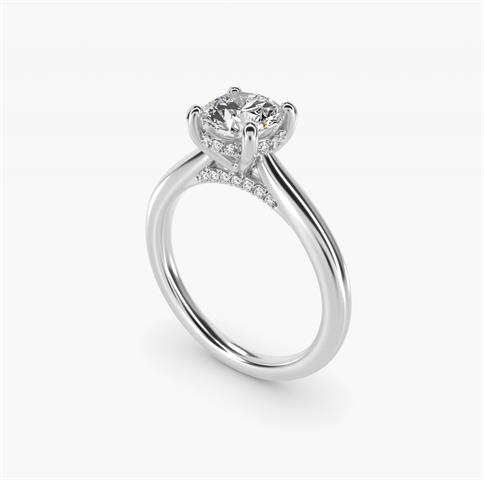
Petite Hidden Halo Solitaire Plus
Platinum · 1.6 mm band
Best if you want the side sparkle
Accent diamonds sit under the center stone: a solitaire from above, sparkle from the side.
$2,775 ring, from
$1,765 setting + $1,010 stone
Check price at Blue Nile: Petite Hidden Halo Solitaire Plus, Platinum (opens in a new tab)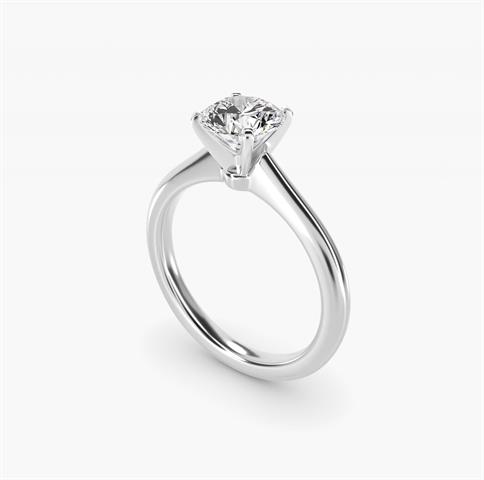
Petite Solitaire
Platinum · 1.8 mm band
Best if you want the cleanest look
The plain version of the same slim look, for about $435 less.
$2,340 ring, from
$1,330 setting + $1,010 stone
Check price at Blue Nile: Petite Solitaire, Platinum (opens in a new tab)Next: the diamond
We would pair these with a 1.5–2 ct lab-grown round, D to H color, VS2 or better.
What happens when you click: Blue Nile prices the setting and the stone separately. You open the setting, then choose a diamond, and it offers handpicked matches if you would rather not filter. Free shipping, free returns and a lifetime warranty at Blue Nile.
Prices checked September 24, 2026 at Blue Nile. Ring prices are the setting plus the cheapest stone at the spec above; most stones cost more than that. Prices change, so confirm at checkout. Product photos: Blue Nile. We earn a commission if you buy through these links.
What the premium actually pays for
A hidden halo costs more because:
- More diamonds. A hidden halo uses 15-25 melee diamonds (1-1.5mm each, typically G-H color, VS clarity). At retail melee pricing, that's roughly $80-$200 in materials alone.
- More setting work. The melee diamonds have to be precision-set into the gallery without disrupting the prong placement for the center stone. This is more labor than a plain four-prong setting.
- More design margin. Most retailers price hidden halos at a higher markup than their plain solitaires because the design appeals to buyers who value detail.
When the premium is worth it
- You spend a lot of time looking at your ring from above (typing, cooking, etc.): the hidden halo gives you the side-profile sparkle you'll actually see
- You're getting a smaller center stone (under 1 ct) and want the ring to feel more substantial without going to a visible halo
- You specifically love the "quiet luxury" aesthetic: the hidden halo is a subtle design choice that says "I noticed and chose this"
When the premium is not worth it
- You'd rather put every dollar into the center stone (more carat, better color, better clarity)
- You're rough on jewelry or work with your hands a lot: more setting elements = more service over time
- You genuinely won't notice the hidden halo once the ring is on your finger (be honest about this)
- You want the cleanest possible look: a plain solitaire is the most classic engagement ring design and ages beautifully
A practical decision framework
Ask yourself: "Will I look at the side profile of my ring more than once a week?"
If yes → hidden halo is worth the premium. If no → put the $400-$800 into a better center stone (more carat, jump from G to E color, or jump from VS1 to VVS1).
The honest take
A hidden halo is a beautiful, modern design choice, but it's an upsell. The setting work itself isn't 25-40% more complex than a plain solitaire; the retailer margin on hidden halo settings is just higher. If you love the look and the side-profile detail matters to you, pay it without regret. If you're on a tight budget, a plain solitaire with a better center stone almost always looks better than a hidden halo with a worse center stone at the same total price.